
What Actually Shortens an eBike Battery’s Lifespan?
Your battery is the most important part of your electric bike. It affects everything from range and performance to long-term ownership costs. The good news? Battery lifespan is not just luck — the way you charge, store, and ride your eBike makes a huge difference.
So how long does an eBike battery actually last?
For most riders, a quality lithium-ion eBike battery typically lasts between 3–5 years or roughly 500–1,000 full charge cycles before noticeable capacity loss occurs.
In mileage terms, that often translates to anywhere from 10,000 to 30,000 miles depending on riding habits, terrain, charging behavior, and battery quality.
Most modern eBikes use lithium-ion batteries, and while the technology is advanced, the basics are surprisingly simple. Once you understand what causes battery wear, it becomes much easier to avoid expensive mistakes and get more years out of your bike.
Here are the biggest factors that impact battery life:
Charge Cycles
Every eBike battery has a limited number of charge cycles, usually around 500–1,000 full cycles. Over time, battery capacity slowly decreases.
For example, a battery that originally delivered 60 miles of range may only provide 35–45 miles after several years of heavy use.
It’s also important to understand that a “cycle” doesn’t mean every time you plug in the charger. Charging from 50% to 100% twice equals one full cycle.
Depth of Discharge
Running your battery all the way down to 0% on a regular basis is one of the fastest ways to shorten its lifespan.
Lithium-ion batteries perform best when kept between roughly 20% and 80% charge. Smaller, partial charging sessions are generally healthier for the cells than constant full drains.
Temperature Matters More Than Most Riders Realize
Batteries hate extreme heat and freezing temperatures.
The ideal operating temperature is around 59–77°F (15–25°C). Leaving your eBike in direct summer sunlight or charging a frozen battery in winter can permanently damage the cells over time. Many riders first notice battery aging during winter rides, where range drops much faster than expected.
Battery Cell Quality and BMS
Not all eBike batteries are built the same.
Higher-quality batteries that use premium cells from brands like Samsung, LG, or Panasonic tend to last longer, run cooler, and deliver more stable performance.
A good Battery Management System (BMS) also plays a major role by protecting against overheating, overcharging, and deep discharge.
According to battery manufacturers and long-term eBike testing data, heat and deep discharge are consistently among the biggest contributors to premature lithium-ion battery degradation.
Smart Charging and Storage Habits
Good battery habits are one of the easiest ways to extend the life of your eBike. Small daily routines can make a noticeable difference over the years.
Here are the most important habits to follow:
-
Always use the original charger that came with your bike
-
Avoid charging to 100% every single day unless you truly need maximum range
-
Try to keep the battery above 20% whenever possible
-
For long-term storage, leave the battery around 40–60% charge
-
Store the battery indoors in a cool, dry place
-
Check stored batteries every 1–2 months and recharge if necessary
Another useful tip: plug the charger into the wall first, then connect it to the bike. This helps reduce the chance of sparking during connection.
Riding Style and Maintenance Also Affect Battery Health
A lot of riders focus only on charging habits, but the way you ride matters too.
Aggressive acceleration, poor maintenance, and unnecessary rolling resistance force the motor to work harder, which drains the battery faster and increases long-term wear.
Use Smooth Acceleration
Launching at full power in the highest assist mode puts extra stress on both the motor and the battery.
A smoother start is more efficient and easier on the system.
Long uphill climbs with heavy throttle use usually generate more battery heat than casual flat-road cruising.
Shift Gears Properly
Treat your eBike like a regular bicycle when climbing hills or accelerating.
Keeping your cadence around 70–90 RPM helps the motor operate more efficiently and reduces strain on the drivetrain.
Maintain Proper Tire Pressure
Underinflated tires increase rolling resistance, which means the motor uses more energy to maintain speed.
Checking tire pressure regularly is one of the simplest ways to improve efficiency and range.
Avoid Carrying Extra Weight
Extra cargo reduces range faster than many riders expect. The heavier the load, the harder the motor has to work.
Riders commuting daily in stop-and-go city traffic often consume battery cycles faster than weekend riders.
Real-World Battery Wear: What Most Riders Notice After 1–2 Years
In real-world riding, most eBike riders don’t suddenly experience total battery failure. Instead, battery degradation happens gradually over time.
For example, many riders report that after 1–2 years of regular riding:
maximum range slowly decreases
battery percentage drops faster under heavy acceleration
cold weather affects performance more noticeably
hill-climbing power becomes slightly weaker
charging frequency increases compared to when the bike was new
Riders who regularly drain the battery to 0%, leave the bike in hot garages, or constantly fast-charge the battery usually notice capacity loss earlier than riders who follow healthier charging habits.
On the other hand, riders who keep their battery between roughly 20–80%, avoid extreme temperatures, and maintain proper tire pressure often report much more stable long-term performance.
Choosing the Right eBike Makes a Big Difference
One of the smartest ways to maximize battery lifespan is starting with a well-built eBike from a reputable brand. Better battery systems, stronger components, and smarter power management all contribute to longer-term reliability.
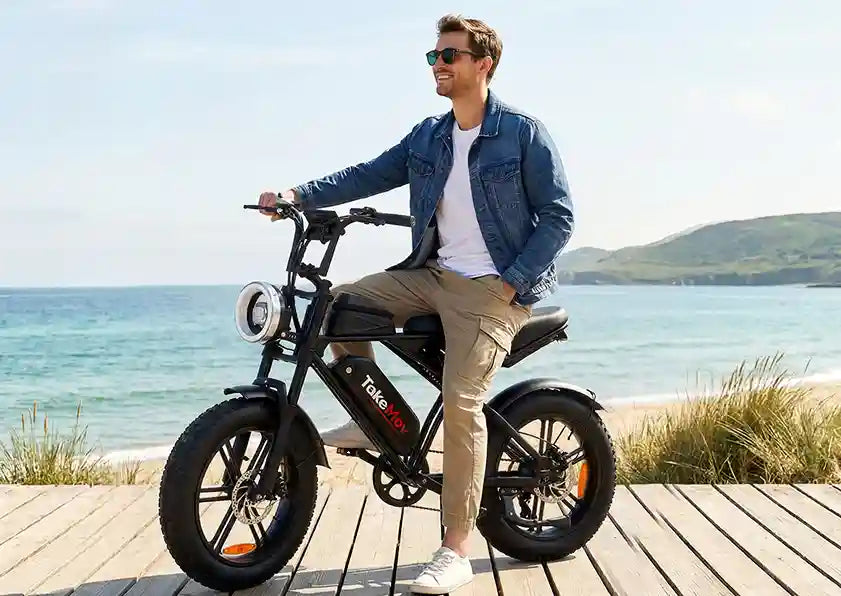
One standout option in the moped-style category is the TakeMov G35H Moped style ebike.
Its larger battery capacity and lower charging frequency can help reduce long-term battery stress compared to smaller battery systems that require constant recharging.
Built for riders who want serious power, long range, and heavy-duty performance, TakMov G35H moped ebike combines a dual-battery setup with high torque and full suspension for both city streets and longer rides.

TakeMov G35H
Discover the monster range of the TakeMov G35H Moped Ebike Dual-Battery system.
Why Riders Choose the TakeMov G35H moped style ebike
High-Capacity Dual Battery System
The 48V 50Ah dual-battery setup delivers a massive 2400Wh of energy capacity, helping extend riding range and reduce charging frequency.
Powerful Performance
A 1000W rated motor with 2000W peak output and 100Nm of torque provides strong acceleration and hill-climbing capability.
Long-Range Riding
The pedal-assist range can reach up to 100 miles under ideal riding conditions.
Comfort-Oriented Design
Full suspension, 20” × 4.0” fat tires, and a moped-style frame improve comfort on rough pavement and uneven terrain.
Advanced Security Features
NFC unlocking and password protection add an extra layer of convenience and theft prevention.
Key Specifications
| Specification | Details |
|---|---|
| Motor | 1000W Rated / 2000W Peak |
| Top Speed | 50 MPH |
| Max Torque | 100Nm |
| Battery | 48V 50Ah Dual Battery |
| Battery Capacity | 2400Wh |
| PAS Range | Up to 100 Miles |
| Brakes | Hydraulic Disc Brakes |
| Tires | 20" × 4.0" Fat Tires |
| Suspension | Full Suspension |
| Frame | High Carbon Steel |
| Charging Time | 10–12 Hours |
| Max Load Capacity | 330 lbs |
| Bike Weight | 107 lbs |
| Unlock System | NFC & Password |
| Drivetrain | 7-Speed |
The TakeMov G35H ships in Class 2 mode by default; riders should check local eBike laws and regulations before unlocking higher performance settings.
How to Know When an eBike Battery Is Wearing Out
Even with excellent care, every battery eventually loses capacity over time. The key is recognizing the warning signs before performance becomes unreliable.
Common Signs of Battery Wear
Noticeably Reduced Range
If your fully charged battery suddenly delivers 30–40% less range than it used to, battery degradation is likely becoming significant.
Charging Problems
A battery that refuses to fully charge or loses power immediately after unplugging may have damaged cells.
Random Power Shutoffs
If the bike turns off unexpectedly during acceleration or hill climbs, voltage stability may be declining.
Physical Damage
Swelling, cracks, dents, or unusual heat should always be treated seriously and inspected immediately.
When Should You Replace an eBike Battery?
Most riders consider replacement once battery capacity drops by around 30–40%. At that point, reduced range and inconsistent performance usually become noticeable enough to impact daily riding.
Other Trusted eBike Systems Worth Knowing
Many premium bicycle brands use drive systems from companies like Bosch, Shimano, and Yamaha.
Brands such as Trek, Haibike, and Specialized also build highly regarded integrated eBike systems focused on efficiency and durability.
How Many Years Should an eBike Battery Last?
A high-quality eBike battery can often last between 3–5 years with proper care. Riders who charge responsibly, avoid extreme temperatures, and reduce unnecessary strain on the motor may extend battery lifespan even further.
Heavy riders, steep terrain, frequent fast charging, and full battery drain cycles can shorten battery longevity over time.
Quick Tips to Extend eBike Battery Life
Keep battery charge between 20–80% whenever possible
Avoid extreme heat and freezing temperatures
Do not leave the battery fully charged for long periods
Maintain proper tire pressure to reduce motor strain
Use smoother acceleration instead of full-throttle starts
Store batteries indoors during winter
Use only the original charger
FAQs
How many miles can an eBike battery last before replacement?
Most quality lithium-ion eBike batteries last between 10,000–30,000 miles depending on riding habits, terrain, battery quality, and charging behavior. Riders who avoid deep discharges and extreme temperatures often see longer battery lifespan.
Is it bad to leave an eBike battery charging overnight?
Occasional overnight charging is usually safe on modern eBikes with a Battery Management System (BMS), but constantly leaving the battery plugged in at 100% for long periods may accelerate battery degradation over time.
Should I charge my eBike battery after every ride?
Not necessarily. Lithium-ion batteries generally perform better when kept between 20–80% charge instead of constantly charging to 100% after every short ride.
What temperature is too cold for an eBike battery?
Most eBike batteries experience noticeable performance loss below 32°F (0°C). Extremely cold temperatures can temporarily reduce range and power output until the battery warms up again.
Does riding fast drain an eBike battery faster?
Yes. Higher speeds, aggressive acceleration, steep hills, and throttle-heavy riding all increase energy consumption and battery wear compared to smoother riding styles.
Share:
6 Best Moped-Style Ebikes 2026: Fast, Stylish & Powerful
6 Best Fat Tire eBikes 2026 for Trails, Hills & Daily Commuting